The Quran Ijazah Exam: What the Teacher Asks and How to Prepare
| When is it? | After completing the full reading to the teacher |
|---|---|
| What is tested? | Recitation, stopping and starting, memorisation (for an Ijazah from memory) and the rules in theory |
| Format | Reciting passages chosen by the teacher from across the Quran, with oral questions |
| After passing | The teacher writes the Ijazah with their connected Sanad |
| If you do not pass | The teacher identifies weak points to revise, then repeats the exam |
After months of reading to the teacher, the student approaches the moment they have been waiting for: the Ijazah exam. Many feel anxious about it because they do not know what they will be asked. In this article we explain what the teacher usually tests, how to prepare, and which mistakes delay the Ijazah.
Is the full reading itself an exam?
Yes, to a large extent. The teacher listens to your recitation throughout the full reading and knows your level well before the final exam. But most teachers hold a final test to make sure the student has mastered what was corrected and recites correctly anywhere in the Quran, not only in recently read passages. The format varies from teacher to teacher, but the main areas are similar.
What does the teacher test in the Ijazah exam?
1. Correct recitation
- Letter articulation and qualities: especially similar letters such as Dad and Dha, Seen and Sad, and heavy and light letters.
- Rules of Noon Sakinah, Tanween and Meem Sakinah: clear pronunciation, merging, hiding and conversion, and the length of nasalisation.
- Elongations (Madd): the lengths of natural, connected, separated and obligatory elongation, and keeping the same length throughout.
- Subtle errors: such as incomplete vowels, over-elongation or weak echoing (Qalqalah).
2. Stopping and starting
The teacher may ask you to stop on a particular word and then resume, to see whether you stop in a way that spoils the meaning or start incorrectly, and whether you apply the rules of stopping on word endings, such as Rawm and Ishmam where they are taken by oral transmission.
3. Strength of memorisation (Ijazah from memory)
The teacher opens the Mushaf at random places, reads the start of a verse or names a surah, and asks you to continue. The focus is usually on Mutashabihat: verses with similar wording in different surahs, because that is where most mistakes happen.
4. The rules in theory
Many teachers ask oral questions about Tajweed rules: defining a rule, explaining why a rule applies in a particular word, or the levels of heavy pronunciation. Some require memorising a Tajweed text such as Tuhfat Al-Atfal or Al-Muqaddimah Al-Jazariyyah before the Ijazah.
5. Features specific to the Hafs narration
Such as the places with a special delivery in Hafs via the Shatibiyyah: Imalah in «مجريها», Tasheel in «ءأعجمي», Ishmam in «تأمنا», the brief pauses (Saktat) on «عوجا», «مرقدنا», «من راق» and «بل ران», and the two permitted ways in «ضعف» in Surah Ar-Rum and «المصيطرون» in Surah At-Tur.
How to prepare for the Ijazah exam
- Collect your teacher’s notes: throughout the full reading, write down every mistake your teacher corrected, and review this list before the exam. It is the most honest guide to your weak points.
- Review the Mutashabihat: set aside time to compare similar verses and write them side by side.
- Recite from random places: open the Mushaf on any page and recite from there, so you get used to starting anywhere.
- Record yourself and listen: you will notice subtle errors in elongation and nasalisation that you miss while reciting.
- Review the rules in theory: start with a summary of the Tajweed rules, then memorise the text your teacher requires.
- Sleep well before the exam: fatigue and stress cause mistakes you would not normally make.
Common mistakes that delay the Ijazah
- Reciting too fast: reading faster than your ability exposes mistakes in elongation and articulation.
- Ignoring corrections: repeating a mistake after it has been corrected shows it was not revised.
- Weak revision of the early parts: many students master what they read last and forget the beginning.
- Getting tense when corrected: correction in the exam is normal; what matters is correcting the mistake calmly and immediately.
Frequently asked questions
Can I fail the Ijazah exam?
If significant mistakes appear, the teacher identifies the weak points, asks you to revise them, and repeats the exam. This is not failure; it is care that your Ijazah is sound.
Is the exam online?
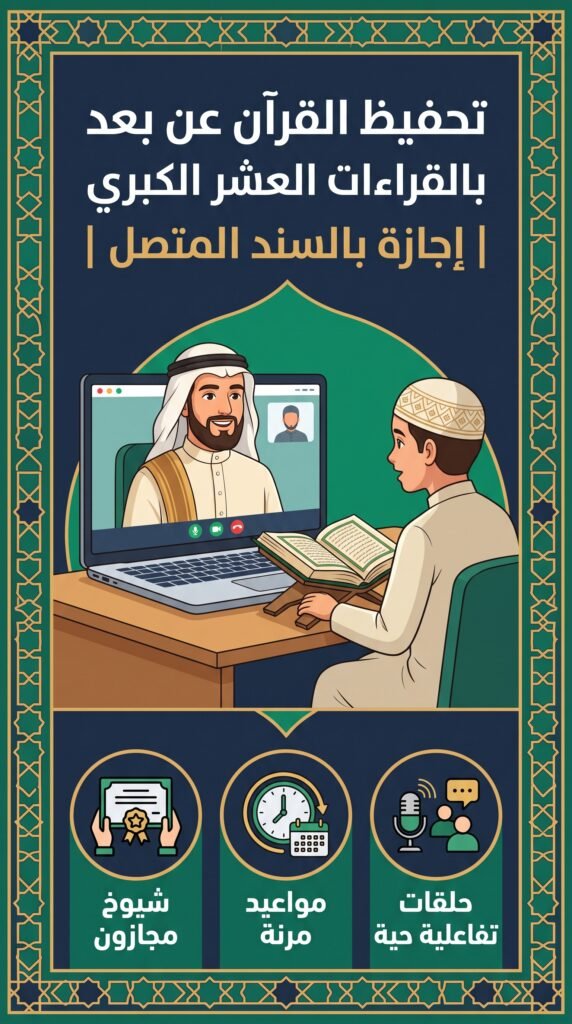
Yes, it is held over a live audio and video connection, just like the full reading. For an Ijazah from memory, the student closes the Mushaf while reciting.
When do I receive the Ijazah after the exam?
After you pass, the teacher writes the Ijazah with their connected Sanad. The Ijazah fee is $100, paid once on receipt; details are in The cost of a Quran Ijazah online.
Start your path to the Ijazah
The exam is the last stop on a journey that starts with your first lesson. Book a free 30-minute trial lesson from the Ijazah track in Hafs an Asim. If the teacher is not the right fit, you get a second free lesson with another teacher. To see the expected timeline, read How long does a Quran Ijazah take.